Can a Mini Split Heat Your Whole House in New Hampshire?
Quick Summary
Yes, a mini split heat pump can heat an entire home in many New Hampshire and Southern Maine cases—but only if the system is properly designed. The number of zones, the layout of your home, and using cold-climate equipment all play a major role. A single unit may work for small spaces, but most full-home setups require a multi-zone system built for New England winters.
Mini splits have come a long way—and today, they’re not just for one room or a small addition.
We regularly install systems across Wakefield, Conway, Rochester, Portsmouth, and throughout Southern Maine that handle full-home heating, even in the middle of winter. But whether a mini split can heat your entire house depends on a few key factors.
Here’s what actually determines if it will work.
The Short Answer: Yes—With the Right Setup
Mini splits can absolutely heat a whole house—but it’s not about the brand or model alone.
It comes down to:
- Proper system sizing
- Correct number of indoor units (zones)
- Strategic placement throughout the home
- Cold-climate performance capability
When those pieces are done right, mini splits can replace—or significantly reduce reliance on—traditional heating systems.
When a Single-Zone System Is Enough
A single-zone mini split (one indoor unit, one outdoor unit) can heat an entire home only in specific situations.
It works best if:
- The home is small and open-concept
- There are minimal walls or barriers
- Air can circulate easily between rooms
Common examples:
- Small ranch homes
- Studio-style layouts
- Open-concept cabins or vacation homes
Even in these cases, there may still be temperature differences between rooms.
When You Need a Multi-Zone System
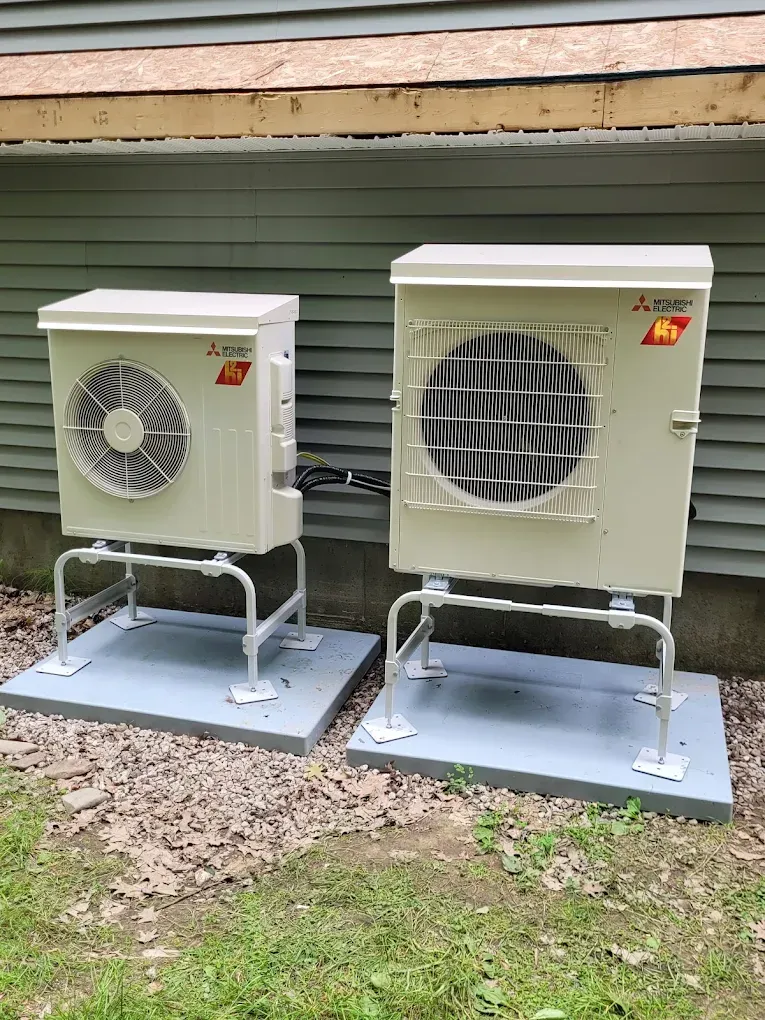
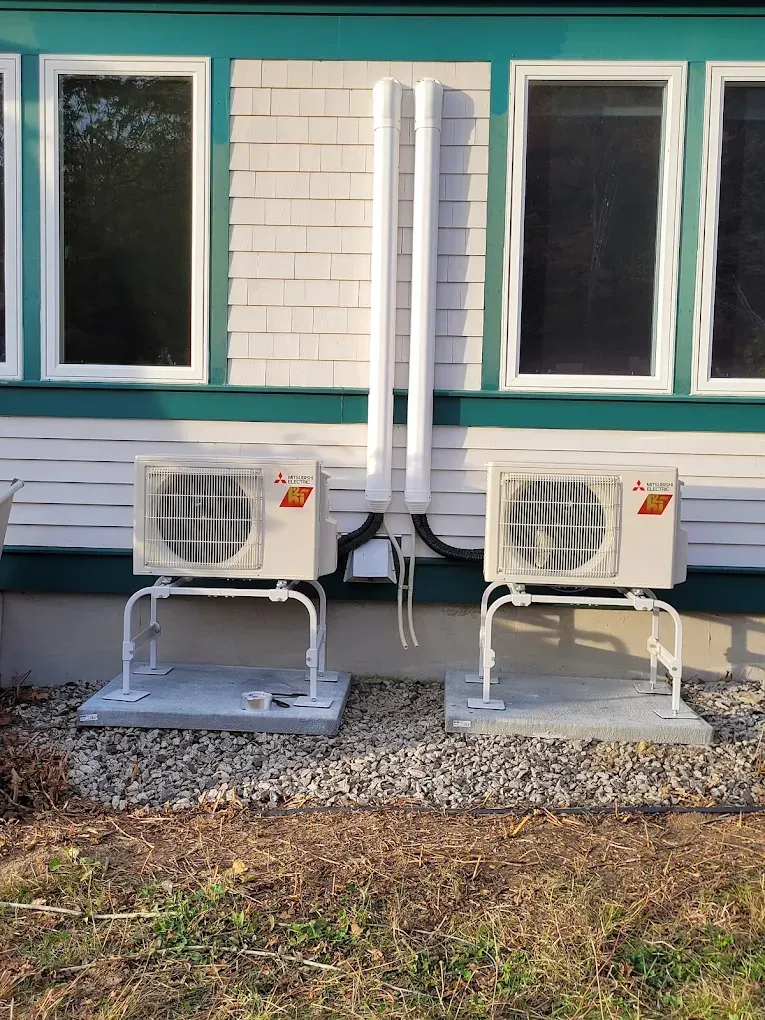
Most homes in New Hampshire and Southern Maine require a multi-zone system to heat the entire space effectively.
Why:
- Heat doesn’t move evenly through walls and hallways
- Bedrooms, basements, and upper floors need separate control
- Older homes often have inconsistent insulation
Multi-zone systems allow you to:
- Install indoor units in key areas
- Control temperature room by room
- Maintain consistent comfort throughout the house
This is the most common setup we install for full-home heating.
Why Cold-Climate Mini Splits Matter
Not all mini splits are built for New England winters.
Cold-climate systems are specifically designed to:
- Maintain heating capacity in sub-freezing temperatures
- Operate efficiently well below 0°F
- Handle defrost cycles without major performance loss
Without cold-climate equipment, performance can drop off quickly when temperatures fall.
👉 Learn more about how these systems work:
https://www.mcdonoughheatncool.com/why-mini-splits
What About Older Homes?
Older homes across New Hampshire and Southern Maine are some of the best candidates for mini splits—but they require careful planning.
Common challenges:
- No existing ductwork
- Drafty construction
- Uneven insulation
- Room-by-room temperature differences
Mini splits solve these issues by:
- Avoiding major duct installation
- Providing targeted heating where it’s needed
- Allowing flexible placement without major renovation
In many cases, a properly designed multi-zone system is the most practical solution.
Homes With Uneven Temperatures
If your home already has hot and cold spots, a mini split system can help—but only if it’s designed correctly.
Problem areas we often see:
- Second floors that run colder
- Basements that never warm up
- Additions that don’t match the rest of the house
A multi-zone system lets you address these areas individually instead of relying on one central source.
Additions and Homes Without Ductwork
Mini splits are especially effective for:
- New additions
- Finished basements
- Detached spaces
- Homes without existing duct systems
Instead of extending ductwork or upgrading an entire system, mini splits give you a direct solution for each space.
System Design Makes or Breaks It
The biggest factor isn’t whether mini splits can heat your whole home—it’s whether they’re designed properly for your specific layout.
We look at:
- Square footage and layout
- Insulation and air sealing
- Window placement and exposure
- How each room is used
That’s how we determine:
- Number of zones
- Equipment sizing
- Indoor unit placement
👉 Learn more about installation:
https://www.mcdonoughheatncool.com/mini-split-installation
When a Hybrid Approach Makes Sense
In some homes, the best solution isn’t all-or-nothing.
A hybrid setup may include:
- Mini splits for primary heating
- Existing systems as backup during extreme cold
This is common in larger homes or properties with unique layouts.
👉 Explore full heat pump solutions here:
https://www.mcdonoughheatncool.com/heat-pump-installation-in-new-hampshire-southern-maine
Real-World Performance in NH & Southern Maine
We’ve installed systems across Wakefield, Conway, Rochester, Portsmouth, and coastal areas in Southern Maine where:
- Winters are cold and unpredictable
- Homes vary widely in age and design
- Efficiency and reliability both matter
With the right setup, mini splits perform well—even in demanding conditions.
So, Can a Mini Split Heat Your Whole House?
Yes—but only if:
- The system is properly sized
- The right number of zones are installed
- Cold-climate equipment is used
- The layout of your home is taken into account
Anything less, and performance will fall short.
Request a Site Visit
If you’re considering using a mini split to heat your entire home, the next step is a proper evaluation.
Call or text McDonough Heating & Cooling to request a site visit. We’ll walk through your home, explain what will work (and what won’t), and design a system that actually delivers consistent, reliable heat.